

Congratulations to the 2023 Ray Smith Scholarship Recipients Copy
The Colorado Motor Carriers Foundation is proud to announce the 2023 Ray Smith Scholarship Winners. Congratulations and good luck as you continue your education...
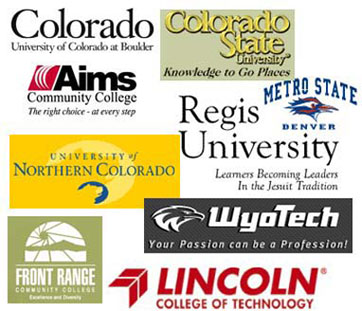
During Back to School Season, Consider Options Besides College
While the beginning of the month of August is prime summer vacation time, getting towards the end of the month is a different story. By the end of August, most kids in the U.S. are heading back to school. For those older kids who are nearing the end of their high school career, they need to get ready to make some big life decisions. What should they do after high school?



The Voice of Colorado's Trucking Industry!
The Colorado Motor Carriers Association is a 501(c)6 membership organization, established in 1939 to unite the trucking industry and its business strength throughout the State of Colorado.
The CMCA Provides:
- Technical assistance to members seeking information and clarification on compliance, regulatory and safety issues.
- More than 50 training classes per year
- Member-only benefit programs to help you save time and money for your business
- A sounding board for trucking issues in the state
Training Classes
Apr
23
Tue
Apr 23 @ 9:00 am – 11:00 am
Cost: $50 members; $100 non-members & walk-ins
This Seminar Covers:
Laws and Regulations Guiding the Relationship between Owner-Operators and Motor Carriers
Apr
24
Wed
Cost: $140 members, $225 non-members & walk-ins
This Hands-on Seminar Covers: How to adjust and manipulate air brakes and air brake systems. Includes video training. Applicable for Safety Managers, Mechanics and Drivers.
Apr
30
Tue
Apr 30 @ 8:45 am – 11:00 am
Join us for Pinnacol Safety Group Training!
Seminars include:
Unscrambling the Claims Puzzle
Understanding your rights and responsibilities after an employee is injured is a key component to managing claims costs. This course provides information about workers’ compensations benefits and rules while connecting the pieces involved in handling claims. After completing this course, you will be equipped to play an active role in the claims management process. Topics include:
- Workers’ compensation benefits provided to injured workers
- Workers’ compensation rules and processes
- Communicating with designated medical providers
- Techniques and tools for managing losses
Incident Investigation
Are the same incidents occurring at your organization over and over again? Discover how investigations can be used as a learning tool to identify causal factors of an incident. During this program, participants will:
- Outline how to use incident investigations as a learning tool to improve the system
- Discuss the importance of being open to multiple causal factors
- Define human error as a symptom not a cause of incidents
Subscribe to filtered calendar
Upcoming Events
Jun
1
Sat
Join us at the Adams Country Fairgrounds, 9755 Henderson Road in Brighton. Facts for Drivers books are available at the CMCA offices. Contact Kate ([email protected]) with any questions or if you would like to volunteer.
Register here!
Jun
3
Mon
Truck Driving Championships are being held over the weekend, so the CMCA Office will be CLOSED on Monday, June 3rd.
Subscribe to filtered calendar
CORPORATE PARTNERS